
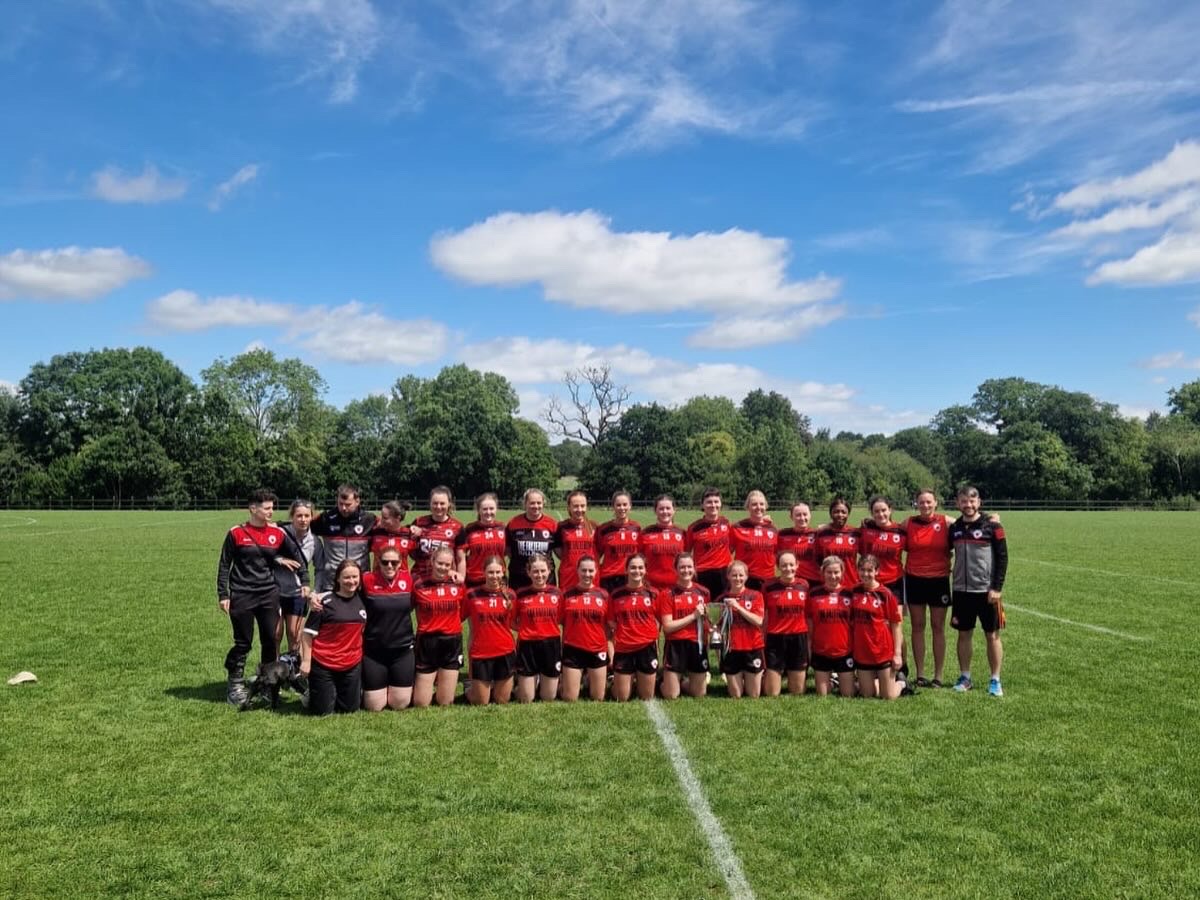
Championship week lasts seven days, and most of it plays out in your head. The fitness is already built. Nothing you do this week will add to it. All that’s left is time.
Monday: the hard session
You wake up and the match is already in your head, before you have opened your eyes.
The hardest session of the week is Monday. In championship week it lands differently. It stops being a session and starts being a test, and if you’re anything like me you’ll have decided what a bad session means before you’ve finished it.
The trap: “My touch was off, I’m going to play badly Saturday.” One miss becomes a verdict.
The reality: one session is one session. Your brain is primed to read everything as significant this week. That is the threat state doing its job, and it is wrong.
The reframe: a hard session is where resilience gets built. It is not a preview of Saturday.
Tuesday to Thursday
This is the stretch players underestimate. The hard work is behind you and the match is not here yet. You have three days to fill and Monday’s session has handed you the material for overthinking.
What I’d do:
- Treat it as a normal training week. Don’t add work. The fitness is already in.
- Eat properly. Hydrate. Protect your sleep from Monday, not from Friday.
- Off social media if you can. If not, mute the accounts that make it louder.
- Have one conversation that has nothing to do with the game.
What makes it worse:
- Watching opposition video your coach did not ask you to watch.
- Extra gym sessions invented this week.
- The tactical debate in the group chat at midnight.
- Replaying Monday. It already happened and it already means nothing.
Friday night
This is when sleep becomes the problem. You’re tired. You should sleep. You can’t sleep.
What helps:
- A wind-down routine you do every night, not just pre-match nights.
- Phone away an hour before bed. Especially social media.
- Read something that has nothing to do with sport.
- If you’re awake at 2am going over it, get up. Water, ten minutes sitting. Then back to bed. Don’t lie there in the dark spinning.
You can perform on less sleep than you would like. The story you tell yourself about the lost hours does more damage than the hours.
Saturday morning
Most players overthink the morning.
- Wake around your usual time.
- A real breakfast, three to four hours before throw-in. Carbs and protein. Do not try anything new on match day.
- Light movement. A walk. Some mobility.
- Let it be a normal morning.
The biggest mistake is playing the game in your head from the moment you wake. This is hours of stress before you’ve left the house. Save it for the warm-up.
Arriving at the pitch
This is where your mind makes its judgement, the fast one it makes before you have thought about anything. “Can I handle this, or can I not?” Everything below is about answering it the right way.
- Run your pre-match routine, the same one as any other game.
- Don’t measure yourself against the opposition warming up. They’re as nervous as you are. Stay in your own bubble.
- Find your senior players. Make eye contact. Steady each other.
- Don’t try to make the speech of your career in the dressing room. The squad has been preparing for months. This part is execution.
The first five minutes
Championship games start chaotic. Both teams are full of adrenaline. Mistakes happen, to everyone, in every game.
- Give yourself one low-stakes opening action. First to the ball. Give the ball and go.
- Don’t do anything ambitious until you have settled.
- If your first touch goes wrong, this is information about how nervous you are. It is not information about how good you are. Reset and go for the next ball.
Teams that get through the first ten minutes without a major error usually win the appraisal battle. Their bodies move from threat to challenge.
Half-time
What helps:
- Hydrate. Eat if you need to.
- Sixty seconds of quiet, away from everyone.
- Two or three things from the tactical update. Not twelve.
- Reset whatever didn’t work in the first half.
What makes it worse:
- A blame conversation, if the first half went badly.
- Getting ahead of yourself, if it went well. The game isn’t over.
- Adding new tactical complexity in your head. Keep it simple.
After the final whistle
If you won, feel it. You earned it.
If you lost, feel that too. Don’t pretend to be fine.
Either way, the conversation in the dressing room decides how this game is remembered. If you won, name the contributions nobody else noticed, not just the obvious heroes. If you lost, hold the room together and don’t let blame start. That conversation stays with people longer than the result does.
What to take into this championship cycle
- Protect your sleep all week. Non-negotiable.
- Off social media. Test it once and see.
- One process anchor for the game. Not “win”. Something you can actually do.
- Check your appraisal. Threat or challenge? Adjust where you can.
- Have a teammate ally For Friday night and Saturday morning. Steadying.
This doesn’t stop you feeling it. Championship pressure is there because you care. The work is noticing what your body is doing and reading it for what it is.
Related articles
References
- Jones, M., Meijen, C., McCarthy, P. J., & Sheffield, D. (2009). A theory of challenge and threat states in athletes. International Review of Sport and Exercise Psychology, 2(2), 161-180.
- Blascovich, J., & Mendes, W. B. (2000). Challenge and threat appraisals: The role of affective cues. In J. P. Forgas (Ed.), Feeling and Thinking: The Role of Affect in Social Cognition. Cambridge University Press. Buy on Amazon
- Conroy, D. E., Willow, J. P., & Metzler, J. N. (2002). Multidimensional fear of failure measurement: The Performance Failure Appraisal Inventory. Journal of Applied Sport Psychology, 14(2), 76-90.
- Fullagar, H. H. K., Skorski, S., Duffield, R., Hammes, D., Coutts, A. J., & Meyer, T. (2015). Sleep and athletic performance: The effects of sleep loss on exercise performance, and physiological and cognitive responses to exercise. Sports Medicine, 45(2), 161-186.
Looking for practical tools to use this in real matches?
Go to the Gael Performance Toolkit for practical tools related to this article.
Open Gael Performance ToolkitHave feedback on this content?
Share feedback