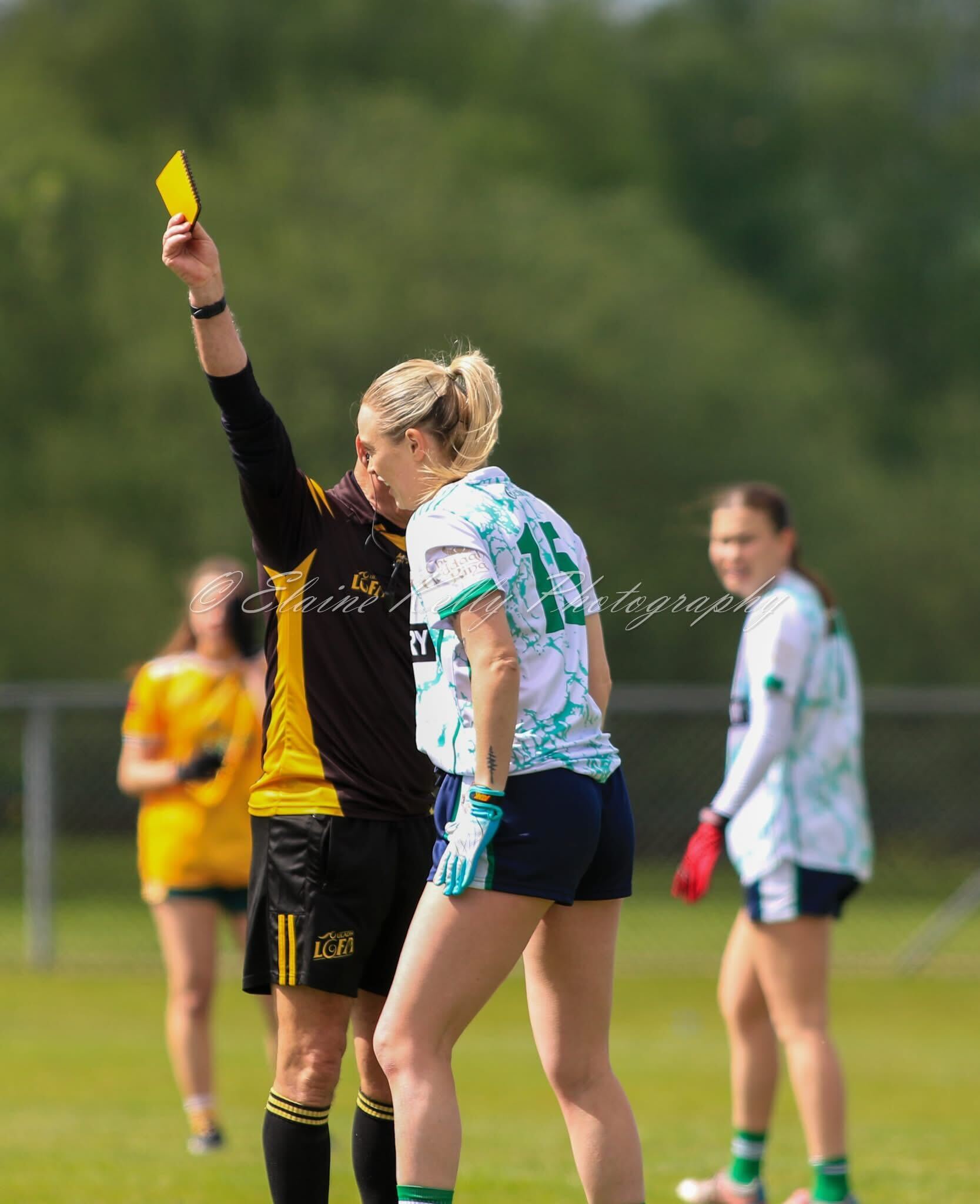
Photo: Sideline Photography
Introduction
My Story
My name is Emily. I'm 32, I live in London, and I play Ladies Gaelic Football for Holloway Gaels.
I'm not an expert and I'm not a psychologist. I don't have this figured out. I still struggle with my mental health regularly.
Sport has always been a huge part of my life, but my run at it has not been straightforward. I had anxiety and depression through most of my sporting career, and for a long time I had no language for it. I didn't understand why pressure felt like too much some days, or why my confidence could swing so far in a week. I just knew I loved football but I was struggling with it at the same time.
Chapter 1
Walking Away
I played underage with Cork. I captained the under fourteens and played until I was 17, realistically on track for Cork senior. From the outside it probably looked like everything was going the right way.
Football wasn't the only sport. I played soccer for Cork and Munster, and camogie with my club. I was on trial for Ireland in soccer too, although I was marking Denise O'Sullivan and didn't make it lol. Sport was who I was, not something I did. My mum was heavily involved in all of it. She loved it as much as I did, and most of my best memories are with her on the sideline.
Then I walked away from it entirely. Not injury. Not because I stopped being good enough. The pressure and the politics had built to the point where it wasn't fun anymore.
Selection played a part, being picked or dropped on who you knew rather than how you were playing. So did the sidelines, parents shouting and arguing about their own children's ability, gossip about players and families around the club. I was pushed too hard, too young. The training loads and the expectations felt more like senior inter-county than underage, and I was told I was the team's hope at 14. I missed the winning penalty in an All-Ireland quarter final at 16 and felt like I had failed everyone around me for weeks afterwards.
Some people walk away from one sport and find another. I didn't. It was seven years before I went back to sport at all. The burnout pushed me towards drink and partying, towards doing what I wanted when I wanted. The pressure was not dealt with. It followed me around in other shapes. Walking away didn't solve it, it just delayed it.
Chapter 2
Early 20s
From 18 to 25 I was drinking heavily. I put on a lot of weight and my confidence went with it, which made me want to go out and drink more, which made all of it worse again. I spent those years with anxiety and depression, but I wouldn't have called it that at the time. I'd have blamed the hangover, or college, or work.
I was rarely sober during university. Then I went to Whistler, where I wasn't sober at all. Looking back, I can't think of many weeks where drinking wasn't part of most days, not just weekends.
Some of the pressure did lift in that time. The people I met only knew that version of me and they didn't hold me to any standard. I was just Emily to them. Not captain, not the girl who was supposed to make it, not anyone's hope for anything. I went to concerts and festivals, I skied, and for a few years life felt lighter. I'm so grateful to those friends. They're still some of my closest today.
I was a high achiever through all of it as well. I did well academically and I have a solid career now.
But the travelling and the whole business of enjoying my twenties put a blanket over the anxiety and the depression. It didn't deal with any of it. It just covered it up well enough that I could keep going.
Chapter 3
Covid Took the Blanket Off
Then the travelling stopped. I came home to Cork to do my masters, working part-time alongside it, fully intending to travel again once I finished.
I went back to football and threw myself at losing weight. I became obsessed with it, went vegetarian for it. But it was another distraction. I latched onto things because they gave me somewhere else to put my head.
Then Covid hit, and I was trapped.
I was miserable. I was having panic attacks on the pitch. I was still drinking, and I spent a lot of time depressed in bed. I spent years blaming everyone else for it. I blamed my family, I blamed football, I blamed Cork and my hometown for making me unhappy.
I met my partner around then and it didn't work out at first, because I put all my faith in him making my life better instead of doing the work myself.
The problem was never my home, or my family, or football. It was me not facing my anxiety and depression.
So I ran away to London to build a happy life. At times I genuinely did. I worked, I skied, I partied, I enjoyed it. But I was a ticking timebomb.
I joined Holloway Gaels and the anxiety came straight back. The pressure of football made everything worse, and because I didn't know football was a trigger I just kept having panic attacks and long stretches of depression without understanding why.
I became obsessed with my weight and how I looked. I couldn't go to training without makeup on. I'd be fidgeting with my gear the whole time, wondering if someone was looking at my weight, or judging how I looked playing, or judging whether I was good enough.
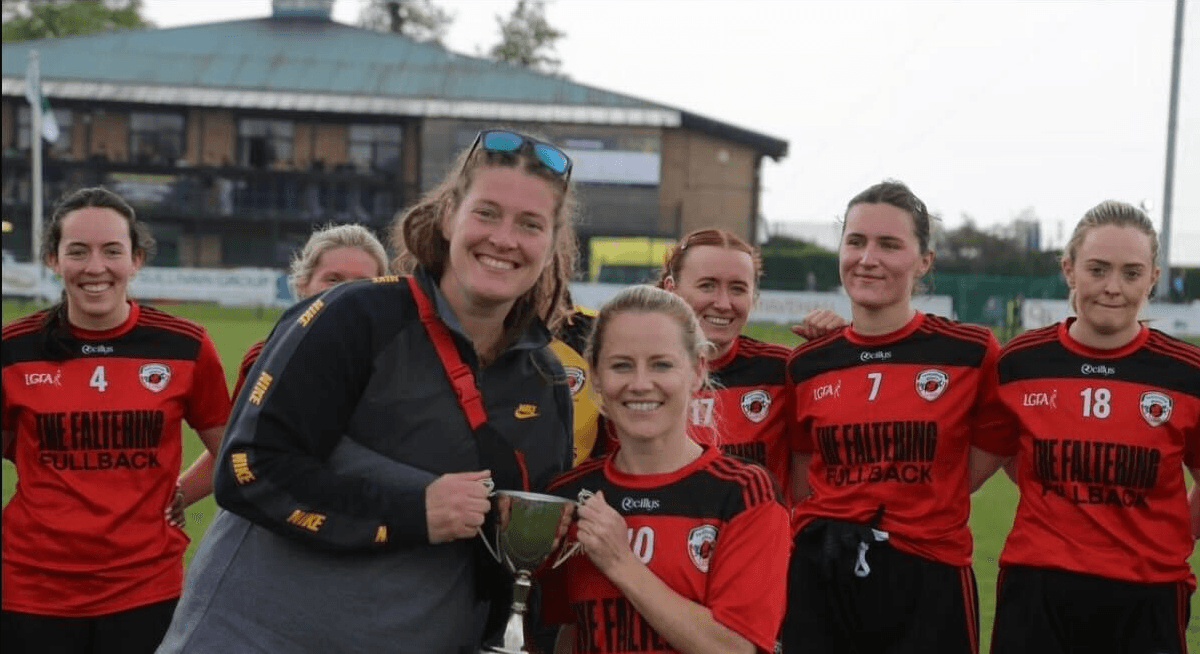
Photo: Photographer TBC
Chapter 4
Hitting Rock Bottom
I'm number 18 in that photo, on league final day. I remember being happy for my team and not being able to feel it for myself, because I was so caught up in my own performance. I wasn't in a good place and it showed on the pitch.
What I understand now is that it wasn't just performance anxiety. I had undiagnosed anxiety and depression and it spilled into everything, not only my sport.
Everything felt heavier than it should have and it kept getting worse. Not just games. Life. Some days felt harder than the one before, I'd be very low for no clear reason, and I'd have panic attacks I didn't understand. My mind was constantly busy. Overthinking, second-guessing myself, never fully in the room. Afterwards I'd replay the whole thing over and over, feeling disconnected from something I had just lived through.
My thoughts became very negative, and I kept blaming other people for how I felt.
It didn't happen all at once. I was drinking heavily and having panic attacks constantly, not just before big games but out of nowhere, in the middle of ordinary days. I had one on the pitch, mid-match, in front of everyone, and no way to explain what had just happened or why.
There were stretches where I couldn't get out of bed for days. Not tired, not hungover in the normal sense. Unable to physically make myself move. My job was suffering for it. I was missing things, underperforming, running on nothing, and too ashamed to tell anyone why.
Eventually I hit rock bottom. My thoughts turned darker and darker, to the point where I was worried for my own safety. I went to my doctor and was put on medication, and for the first time in 15 years my head went silent.
That's when I realised how loud it had been. The overthinking started when I was a teenager and I had carried it so long I thought it was normal. I just didn't know.
Getting the right help was the turning point. It gave me room to think, and from there I could finally start doing the work on the mental side of my sport and my life.
Chapter 5
Where I Am Now
When I first wrote this I was 47 days sober. I wanted to be honest about it, because people look at me and don't think I had a problem. I did.
Once I started drinking I couldn't stop. The anxiety and the depression eased in that moment and I wanted to hold onto that feeling as long as I could. Nine times out of ten it ended in a blackout, and a lot of regrets.
I sought help for the drinking in the end. The medication quietened my head enough for me to see I had to stop drinking if I wanted the anxiety and depression to be manageable. I used alcohol as a crutch for years and I'm still working through it, one day at a time.
I still overthink everything. Whether I'm good enough, whether I'm fit enough, whether I'll be dropped. I still have weeks where my head is hard work. The difference is I know what it is now, and I know what helps, even while I'm still figuring it out.
It took a lot of work, a lot of learning, and a lot of uncomfortable looking at how I was thinking, feeling and showing up, in sport and out of it. Mind the Gael is the thing I wish I'd had when I was younger. The language, the tools, and the honest stories that would have helped me understand my own head a lot sooner.
I built it hoping it helps at least one person avoid what I went through.